UMR-TSE R
The research unit is jointly managed by its three main supervisory bodies: Toulouse School of Economics, CNRS, and INRAE.
It is affiliated with the Toulouse Capitole Experimental Public Institution, which serves as a secondary sponsoring organization and provides dedicated facilities for its research activities.
The research conducted within the unit primarily covers economics, mathematics, statistics, and other quantitative social sciences, reflecting the multidisciplinary nature of the research environment.
In 2025, the unit was evaluated by the High Council for the Evaluation of Research and Higher Education (HCERES) as part of Wave A, covering the 2021–2025 assessment period.
The unit brings together approximately 140 researchers and faculty members and hosts more than 80 doctoral students, demonstrating a strong commitment to research-based training and academic excellence.
From a scientific perspective, the UMR is structured around ten research teams:
- Behavior, Institutions and Development
- Econometrics and empirical economics
- Industrial Organization
- Public economics and political economy
- Theoretical Economics
- Environmental and natural resource economics
- Finance
- Macroeconomics
- Mathematics of decision making and statistics
- Quantitative Social Sciences
The unit is headed by Arnaud Reynaud (INRAE), with Philippe De Donder (CNRS) serving as Deputy Director.
Its administrative division is overseen by Nathalie Lalbertie (Toulouse School of Economics), in her role as Secretary General.
The administrative team consists of eight staff members who ensure the day-to-day operations of the structure.
Address
TSE-R
Toulouse School of Economics
1 Esplanade de l'Université
31080 Toulouse Cedex 06
France
The unit is organized around:
Ten thematic research groups, building on TSE-R’s longstanding strengths in economics, mathematics, and statistics while embracing the full spectrum of quantitative social sciences.
A network of TSE-P centers, including the Digital Center, the Energy & Climate Center, the Sustainable Finance Center, the Infrastructure & Networks Center, the Competition Policy & Regulation Center, and the Health Center, which foster dialogue between researchers, policymakers, and industry leaders.
TSE-R is committed to developing and maintaining world-class research infrastructure, providing essential support in scientific computing, data management, and data utilization. This commitment is further strengthened by a dedicated experimental laboratory that enables researchers to conduct cutting-edge empirical and behavioral studies.
Beyond Scientific Output
- Shaping public policy
- Bridging the gap between science and society
- Building an international presence
The Laboratory Council is an advisory body that oversees the activities of the research unit and ensures the representation of all categories of staff within the laboratory. It serves as a key forum for dialogue between the unit’s director and representatives of the research, administrative, technical, and doctoral communities.
Convened twice a year by the director, the Laboratory Council is consulted and informed on all matters concerning the life and strategic direction of the unit. Whenever required, its opinions and recommendations are formally expressed through a vote.
The TSE-R Laboratory Council consists of 16 members: 10 elected members (6 full members and 4 alternates), 4 appointed members, and 2 ex officio members (the Director and Deputy Director).
The elected members are drawn from the following constituencies:
- Professors and Research Directors: 2 full members and 1 alternate;
- Associate Professors and Research Fellows: 2 full members and 1 alternate;
- Engineering, Technical and Administrative Staff (ITA/IATOS): 1 full member and 1 alternate;
- Doctoral Students: 1 full member and 1 alternate.
Members are appointed for a five-year term. This term may be adjusted in the event of changes to the structure or organization of the research unit.
TSE-R was established on January 1, 2016, through the merger of three economics research units: GREMAQ, LERNA, and ARQADE.
This merger built on a process of integration initiated in February 2007 under the French Research Programme Act of 2006. At that time, the three laboratories joined forces and were awarded one of the thirteen Advanced Thematic Research Network (Réseau Thématique de Recherche Avancée – RTRA) designations granted by the French government. This recognition led to the creation of a Scientific Cooperation Foundation and the establishment of the Toulouse School of Economics (TSE) and the Jean-Jacques Laffont Foundation.
In 2012, the initiative received the prestigious LABEX (Laboratory of Excellence) label under the French government’s Investments for the Future programme, further strengthening TSE’s position as a leading international center for research in economics and the social sciences.
GREMAQ
After completing his studies in Toulouse, Paris, and at Harvard University, Jean-Jacques Laffont returned to Toulouse in 1980 as a professor at the University of Toulouse Capitole.
In 1981, he founded the Research Group in Mathematical and Quantitative Economics (GREMAQ) and succeeded in attracting many of France’s leading economists to Toulouse. His ambition was to establish the University of Toulouse as one of Europe’s foremost centers for research in economics.
GREMAQ was affiliated with the CNRS, the EHESS, the University of Toulouse Capitole, and INRA. In January 2007, INRA’s ESR team, specializing in agricultural and agri-food economics, joined the research unit.
Research Areas
- Agriculture and Agri-Food Economics
- Experimental and Behavioral Economics
- Econometrics
- Industrial Organization
- Public Economics
- Theoretical Economics
- Macroeconomics
- Mathematics and Statistics
List of successive directors and deputy directors:
- 1981-1987 : Jean-Jacques Laffont (UT1)
- 1987-1993 : Michel Moreaux (UT1)
- 1993-1997 : Eric Renault (UT1)
- 1997-2005 : Bruno Jullien (CNRS)
- 2005-2008 : Michel Le Breton (UT1), Pierre Dubois (INRA)
- 2009-2010 : Philippe De Donder (CNRS), Vincent Réquillart (INRA)
- 2010-2014 : Philippe Bontems (INRA), Karine Van Der Straeten (CNRS)
- 2014-2016 : Jean Marie Lozachmeur (CNRS), Vincent Réquillart (INRA)
LERNA
The Laboratory of Natural Resource Economics (LERNA) was founded in 1999 by Michel Moreaux.
It was established through a joint initiative of INRA, notably its Rural Economics and Sociology (ESR) team, and the University of Toulouse 1, with the aim of developing on the Toulouse campus a center of excellence in environmental and natural resource economics. The French Alternative Energies and Atomic Energy Commission (CEA) was also affiliated with the laboratory for a period of time.
LERNA quickly developed a strong international reputation for its research on environmental economics, natural resource management, energy, and sustainable development, while promoting interdisciplinary collaboration between economists and researchers from related scientific fields.
Research Areas
- Environmental and Natural Resource Economics
- Energy Economics
- Sustainable Development
- Agricultural Economics
- Climate Change and Environmental Policy
- Public Economics
- Industrial Organization
- Dynamic and Intertemporal Economics
Research Areas:
- Growth, Environment, Energy
- Water Management and Related Ecosystems
- Risk, Environment, and Non-Renewable Resources
- Public Regulation, Growth, Environment, and Energy Transition.
List of successive directors and assistant directors:
- 1999-2006 : Michel Moreaux (UT1), JP Amigues (INRA, 1999-2006) et Bertrand Villeneuve (UT1, 2004-2006)
- 2007-2009 : Christian Gollier (UT1), François Salanié (INRA)
- 2009-2015 : François Salanié (INRA), André Grimaud (UT1)
ARQADE
The Workshop for Applied Quantitative Research in Economic Development (ARQADE) was established in October 1997 at the initiative of Jean-Jacques Laffont. It succeeded the Centre for Economic Studies and Development Planning (CEPED), which had been directed by Georges Molins-Ysal.
Jean-Paul Azam, a former student of the University of Toulouse 1 who had recently returned as Professor of Economics and was a recognized specialist in African economies, became ARQADE’s founding director.
ARQADE was created with the ambition of restoring the standing of applied economic research, demonstrating—as Jean-Jacques Laffont emphasized—that rigorous empirical analysis is fully compatible with sound economic theory. The laboratory sought to show how robust econometric methods can be used to test theoretical models, generate reliable evidence, and provide valuable insights for economic policymaking.
Initially focused on issues related to economic development and African economies, the team progressively broadened its research agenda to include a range of countries in Latin America and other developing regions.
List of successive directors:
- 1997-2010 : Jean Paul Azam (UT1)
- 2010-2015 : Stéphane Straub (UT1)
Withdrawal of EHESS
EHESS withdrew on January 1, 2023, as a secondary supervising institution (with only one affiliated researcher).
Establishment of the "Grand Etablissement TSE"
January 1, 2023, also marked the creation of the Toulouse School of Economics and Quantitative Social Sciences (TSE), which became a new sponsoring institution of the joint research unit (UMR).
Transformation of UT Capitole
On the same date, the University of Toulouse 1 Capitole adopted the status of an Experimental Public Institution under the name “Université Toulouse Capitole,” which is now a secondary affiliate of TSE-R.
New Structure of Regulatory Oversight
Since January 1, 2023, the TSE-R Joint Research Unit (UMR) has been jointly supervised by three principal sponsoring institutions—TSE, INRAE, and CNRS—and one secondary sponsoring institution, UT Capitole.
Contact
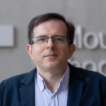
Director TSE-R Arnaud Reynaud
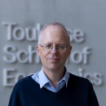
Deputy Director, TSE-R Philippe De Donder

Secretary General, UMR TSE-R Nathalie Lalbertie
Latest news

Économie du désordre mondial (Economy of Global Disorder) : A Best-Seller That Fuels Public Debate
-
Corporate
-
Research
-
TSE Research
-
Development
-
Social and Behavioral Sciences
-
Economics

Do our Networks shape who we become? (podcast)
-
Outreach
-
IAST Research
-
TSE Research

Human Capital Conference 2026
-
Corporate Relations
-
TSE Research
-
Partnership research
-
Human Capital