This article was published in TSE science magazine, TSE Mag. It is part of the Autumn 2025 issue, dedicated to finance and money. Discover the full PDF here and email us for a printed copy or your feedback on the mag, there.
Climate action demands a radical reboot of our economy, changing how we generate energy, build, and grow food. But who will pay? Given the huge investments required, it’s time to sow the wealth of private capital.
What role can students and young professionals play?
Today’s students are tomorrow’s policymakers, analysts, and entrepreneurs. As they will be much more affected by climate change, they can demand better ESG (environmental, social and governance) reporting, design new financial products, or launch responsible startups. They can also pressure societies and governments to adopt forward-looking climate policies and to make climate action attractive – not just for idealists, but for all investors – using tools like carbon pricing.
How much will the green transition cost?
The world needs $5 trillion in green investment per year to reach net zero by 2050. That’s about 5% of global GDP. To help pay this massive bill, we should look to private finance. In spite of all the recent political and societal setbacks, it is imperative not to lose sight of this objective. It remains entirely feasible.
What’s holding back investors?
Unpredictable policy shifts – like Trump’s reversal of Biden’s climate legislation – discourage investors who need to know the rules won’t change tomorrow. Innovation takes time.
This problem is aggravated by financial constraints affecting many decision makers that are individually small but collectively hold a key role for a successful energy transition: small firms, households, and governments and individuals in poor countries. The right mix of public guarantees, subsidies, and energy policies can address this problem.
Does sustainable finance work?
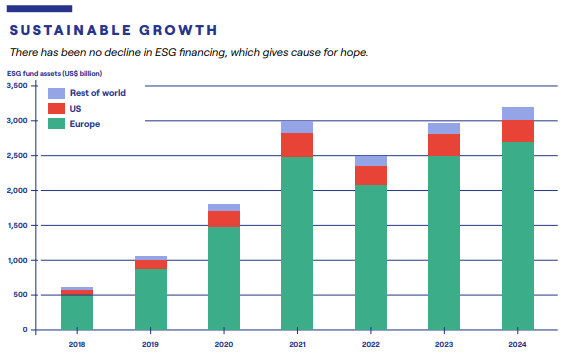
By reallocating capital toward green industries, ESG investors are making it more expensive to finance fossil fuels. The transition in energy and electric vehicles has also been faster and cheaper than expected, driven by innovation, consumers, and governments. This shows us what's possible. However, transparency and regulation are crucial to discourage greenwashing.
Finance isn’t a magic bullet. But with smart policies, clear signals, and coordinated action, we can unlock trillions in investment with real returns, for people and the planet. I have no doubt that global financial markets have the capacity to unlock the funds needed for an ambitious climate agenda.