Published in La Tribune
To encourage investment in the electricity industry, in July 2024 the European authorities published Regulation 2024/1747, encouraging operators to sign Power Purchase Agreements (PPAs), i.e. "bilateral purchase agreements between producers and purchasers of electricity that are concluded on a voluntary basis and are based on market price conditions without regulatory intervention in price setting". Companies operating in the electricity market had not waited for the green light from Brussels to sign PPAs. A report published by the Commission de Régulation de l'Energie (CRE) in March 2025 outlines the development of these contracts in France between 2019 and the summer of 2023 to finance renewable electricity generation assets.
Parties to the contract
The CRE report is based on a survey carried out during the summer of 2023 among signatories of PPAs with a duration of 10 years or more concerning new renewable electricity generation assets located in mainland France. A total of 47 companies responded to the survey, representing 116 contracts and 162 installations (141 photovoltaic farms, 18 onshore wind farms and 3 cogeneration or waste heat recovery facilities). As the companies surveyed were not obliged to respond, the data collected cannot be considered statistically significant. However, the responses reveal some interesting insights.
Firstly, the PPAs mainly concern solar energy. Out of a total of 3,160 GWh of annual production expected from these installations (the generating capacity), three quarters concern photovoltaics and only 25% onshore wind power. Secondly, the buyers are mainly large-scale electricity consumers. Retail electricity suppliers (who buy for resale) account for just 10% of the generating capacity contracted by PPA, and only for photovoltaics. Why is solar so dominant over wind power, and why is there so little interest from suppliers in these renewable electricity PPAs?
The vagaries of wind power
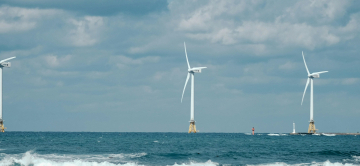
There's no single explanation for the reluctance to sign PPAs for energy from wind farms. On the producer side, the advantages of public subsidies (green electricity purchasing obligation, now replaced by additional variable remuneration) and, on the supplier side, the ARENH system probably play a dissuasive role. An additional explanation that should not be overlooked is the irregularity and unpredictability of wind events. An industrial consumer or a supermarket can live with alternating day and night deliveries of electricity, since it is closed at night. For them, a photovoltaic PPA is therefore an acceptable source, even if on certain days cloud cover forces them to make larger-than-expected additional purchases. On the other hand, whereas the purchaser of a PPA signs up to escape price fluctuations on the wholesale market, a wind PPA introduces a quantity hazard into his supply that needs to be covered. This is even truer for a retailer committed to supplying electricity to its portfolio of customers. The need for guaranteed supply probably explains why most respondents to the CRE survey only use renewable PPAs for up to 20% of their needs...
Raed more on La Tribune
Illustration : American Public Power Association on Unsplash